What makes a player keep playing one game and leave another after a few minutes?
This article looks at the psychology behind player motivation and how first impressions shape long-term engagement. It is based on our observations of released games over six months.
01Why do people play games?
There are many theories about player motivation. To understand which activities your game offers and who will play them, I don't know anything better than Nick Yee's work over the last decade. Here I want to look closer at the first-time user experience: from a few minutes to a few hours of play, depending on how casual or core the game is.
At that stage, players haven't yet discovered the features that serve their personal play style. Two general psychological ideas explain a lot of what happens.
Intrinsic vs extrinsic motivation. Both can engage people, but extrinsic motivation should not lead the first-time experience, or any later step. Because of the overjustification effect, overused external rewards kill intrinsic motivation. Someone who loves writing for its own sake can lose interest once it becomes about money or praise. That can work when writing is your living, but players aren't paid. When they lose interest, they leave. Players engage because a game is enjoyable in itself, so early play should offer fun, exploration and curiosity.
Self-determination theory explains motivation through three basic needs:
- Autonomy: the feeling of free choice in the game's world and mechanics.
- Competence: being challenged and still able to succeed, which is also the core of Csikszentmihalyi's flow.
- Relatedness: connection to the game world or community. Easier to understand in multiplayer games (not easier to achieve), but single-player games can create it through story, a living world or the community around the game. Even watching other people play, in streams or short videos, fills this need, which is why real-player footage works so well in ads that aren't intrusive.
Why do people play? To have fun and feel the emotions that come when autonomy, competence and relatedness are fulfilled.
02The role of arousal in early engagement
For a long time, the only way to measure the experience was questionnaires and interviews that asked players to remember parts of the session. Good methods, but hard to apply to the experience as a whole. Facial coding now gives per-second data on emotional arousal without long questionnaires.
In psychology, arousal is a state of alertness and engagement with a stimulus. It shows in pupil size, heart rate and facial expression, and it reflects how well the game holds attention and moves the player emotionally. A rising trend means the game is working. A drop means players are losing interest and may soon leave.
- Absolute levels differ by genre, but the trend behaves the same in shooters, hidden object games and match-3: up when players are engaged, down when the game gets difficult in the wrong way or boring.
- Arousal also spikes when players are frustrated. Context matters: make sure there are no rises where there shouldn't be.
- People can't hold high activation and focus for long, usually 20 to 40 minutes depending on the task. Give players rest, and remind them of anything important introduced near the 40-minute mark.
- It's easier to keep arousal at a level than to bring it back after a big fall.
- Ads pull players out of the experience and cause large drops. Postponing ads and offers for a few sessions can mean deeper immersion, better retention and, long term, more purchases from players who actually want something.
03What raises arousal in games
The list isn't complete, but these are our main observations across games and genres, and they match the theory above.
Challenge and competition. Flow shows up directly in arousal. As soon as difficulty becomes unbearable or trivial, and players decide their chance of reaching the goal is too low, arousal drops sharply. That gives us a way to track engagement directly, not only through projective methods. Challenge isn't just for souls-likes and PvP. Every genre needs it; only the optimal level differs.

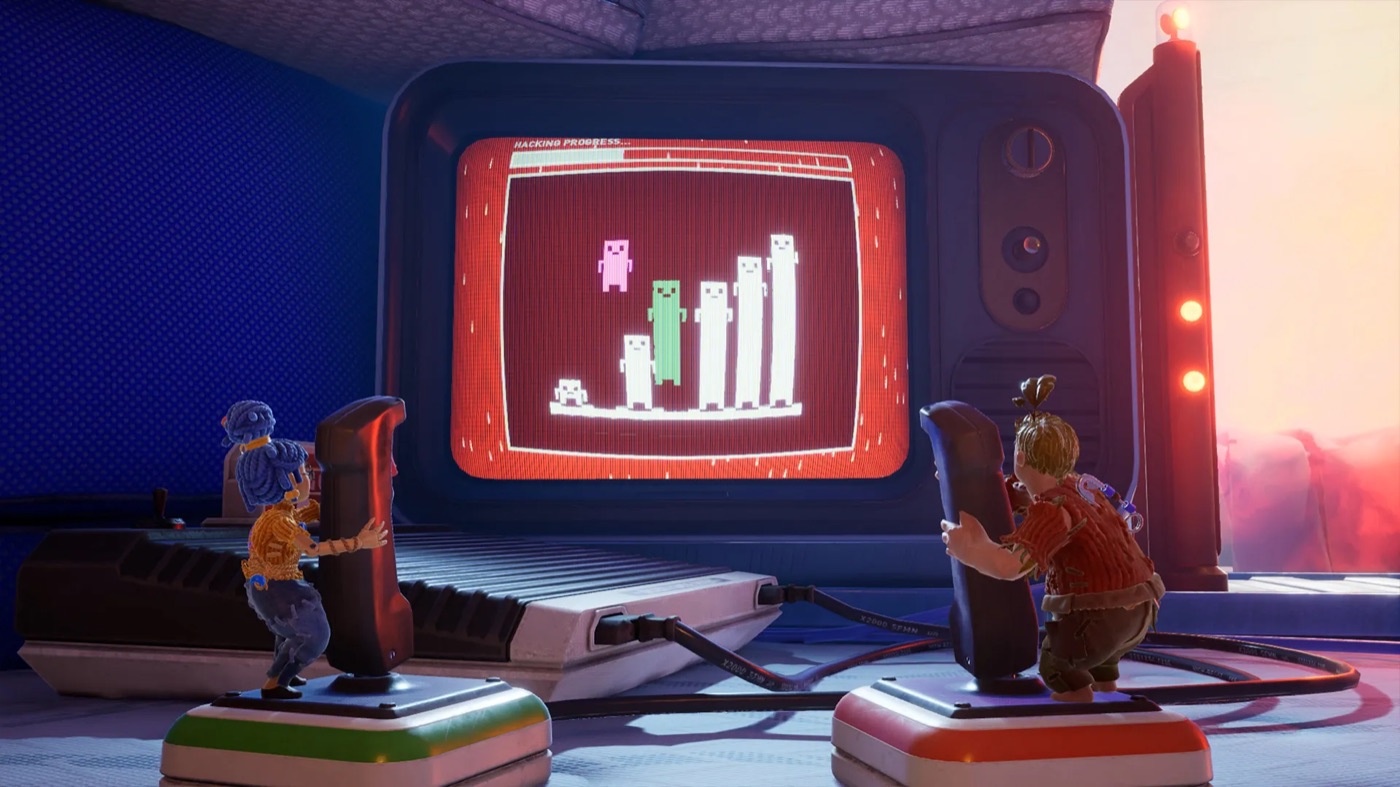
Learning new mechanics. In every game we tested, tutorials and new mechanics raised arousal while players learned them. Dopamine released during learning works as a reward signal and reinforces the behaviour. It Takes Two, Game of the Year 2021, used this brilliantly: every location brings a new mechanic to learn, plus competitive mini-games with completely different gameplay. It solved one of the hardest design problems: making a game fun for both newcomers and experienced players.
Novelty and exploration. Surprise, mystery and the unexpected raise engagement. When a game becomes too predictable, the brain anticipates the reward and the dopamine arrives early, in smaller pieces, so a strong feeling of success becomes a slightly better mood. This doesn't mean open worlds win. Story, choices and deep lore can create the same feeling. The first meeting with a fox in Ghost of Tsushima is engaging and surprising, though the predictability of repeats can wear it down.

Social interaction. Social elements can boost arousal, or kill it through emotional contagion. Social effects don't only happen inside the game. Feeling part of a community outside it is strong too, which is why games support clans, competitions, stats, chats and forums. If you build a community, plan for group effects.

Narrative and emotion. Neuroimaging studies show that watching or interacting with characters activates the same brain regions as our own emotional experiences. Players identify with characters, and that bond makes them want to come back. Story can be added to almost any genre to create a sense of progress or an emotional hook in the first session.

—The power of first impressions
Games that hook players from the first session don't do it by copying successful mechanics. They work with what drives motivation: autonomy, competence and relatedness. People choose to play to feel something, not to spend. Meaningful challenge, constant learning, novelty, social connection and a compelling story raise engagement. Keep the trend rising: it is much harder to win interest back than to hold it.